Creating Community Through Design
Contemporary urban environments increasingly face a quiet paradox: while density continues to grow, genuine human connection often diminishes. In response, architecture and urban design are re-examining one of their most fundamental roles, not only to shape space, but to cultivate community.
Architecture has the power to bring people together or keep them apart. Thoughtful design can foster community, encourage interaction, and create a sense of belonging.
Shared Spaces
At the heart of this approach is the idea that connection is not accidental. It is designed. It emerges from carefully considered spatial relationships, from the layering of public and private realms, and from the presence of shared landscapes that invite interaction without obligation.
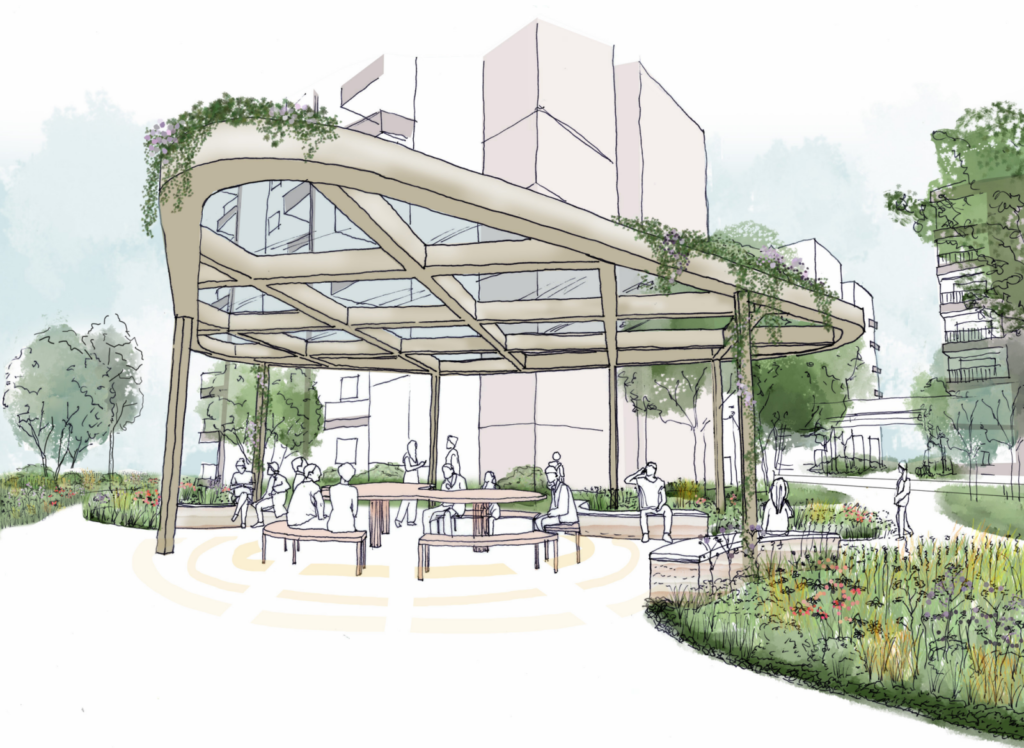
One of the most effective strategies in fostering everyday community lies in the integration of pocket gardens. These small, intimate green spaces act as extensions of the home, offering moments of pause within the urban fabric. They are not grand or performative; instead, their strength lies in their accessibility and familiarity. Here, residents encounter each other in unplanned ways, a brief conversation, a shared moment of care, or simply the recognition of a neighbour’s presence.
Human Scale
Beyond the scale of the immediate dwelling, communal gardens expand this idea into a collective realm. These shared landscapes become social anchors, supporting activities that range from gardening and gathering to quiet observation. Unlike programmed public spaces, communal gardens rely on the subtle choreography of proximity and openness, encouraging interaction while respecting individual comfort.
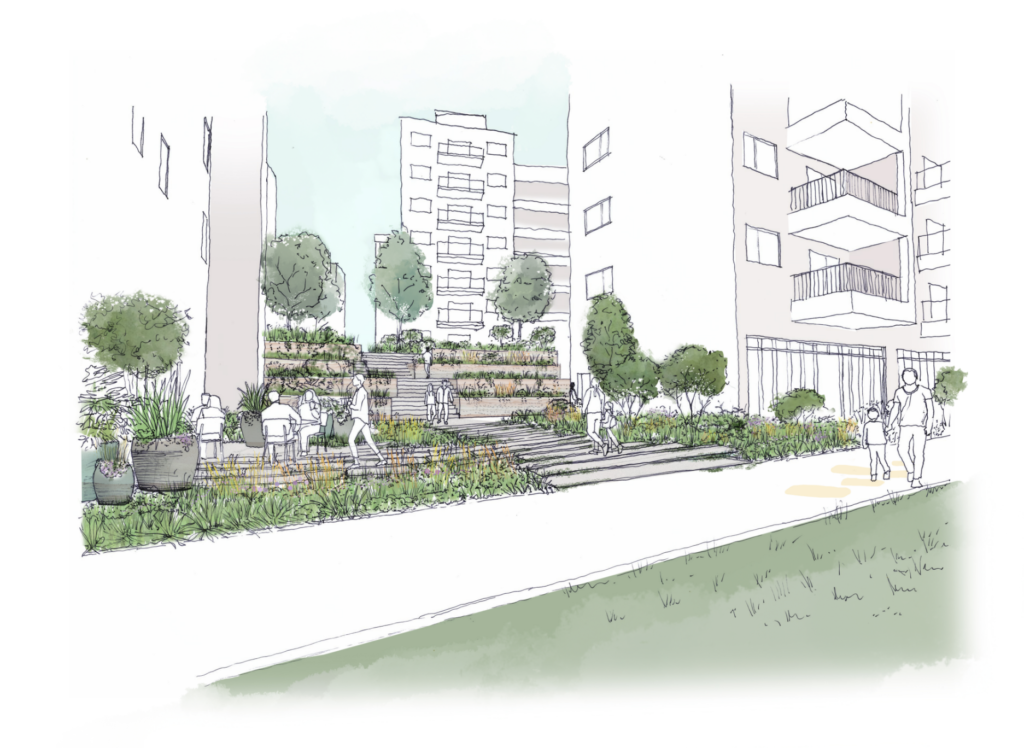
At a larger scale, the introduction of a green axis within urban planning connects these fragmented moments into a continuous spatial narrative. This linear landscape structure acts as both ecological infrastructure and social framework, stitching together residential clusters, public amenities, and everyday routes of movement. It transforms circulation into experience, allowing nature and community life to coexist along a shared corridor.
Together, these layers, pocket gardens, communal gardens, and green axes form a multi-scalar system of connection. Each operates at a different intensity of privacy and publicness, yet all contribute to a single goal: strengthening the social fabric of the city through design.