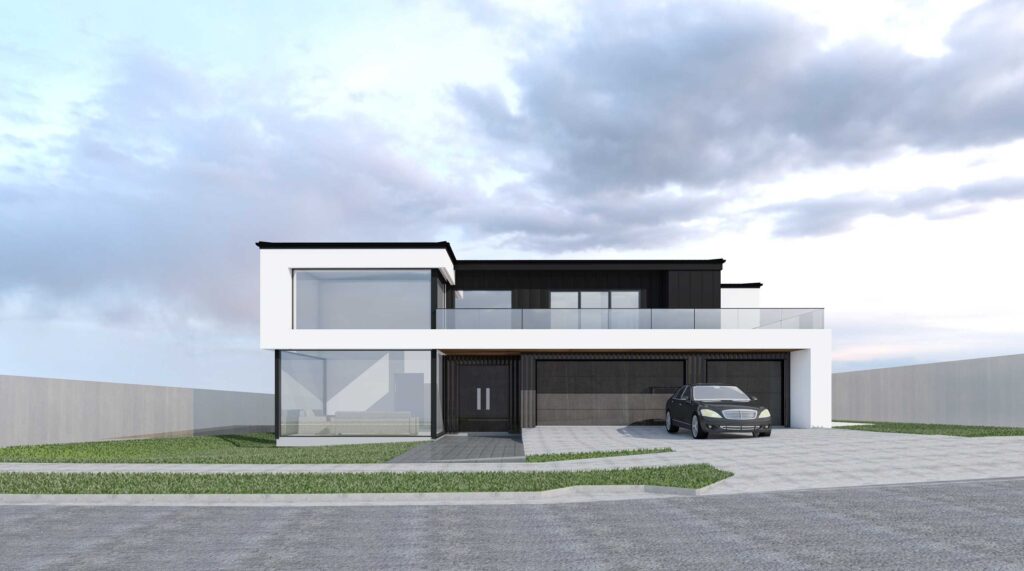
The Power of Simple Forms

Why do certain buildings become unforgettable?
Timeless Elegance
In an age where architecture often competes for attention through complexity and spectacle, the buildings that remain most deeply embedded in our collective memory are often those built upon clarity. Their forms are simple, their messages direct, and their concepts immediately legible. They are not diluted by excessive gestures or obscured by overcomplicated narratives. Instead, they possess a rare confidence, the power of simplicity.
Iconic Building
An iconic building is not necessarily defined by size, cost, or technological ambition. Its enduring presence comes from something more fundamental: recognisability. People remember architecture that speaks clearly. A strong silhouette, a singular idea, or a form distilled to its essence can become permanently carved into the public imagination.
Simple form does not imply simplistic design. Rather, it demands greater discipline. To reduce architecture to its essential expression requires precision and conviction. Every line, proportion, and spatial decision carries greater weight when there is nowhere for the design to hide.
This is perhaps why people are so deeply drawn to certain designs. They respond not only to visual impact but to conceptual clarity. Architecture with a direct and understandable idea generates an immediate emotional connection. It invites recognition before interpretation.
The most celebrated buildings throughout history often share this quality. Their power lies not in complexity alone, but in their ability to communicate a singular and memorable identity. Such architecture becomes more than a physical object; it becomes an image, a symbol, and sometimes even a cultural memory.
The power of simple form lies precisely here in its ability to move beyond architecture itself. When form and concept align with clarity and purpose, design becomes something people do not merely observe, but genuinely embrace and remember.